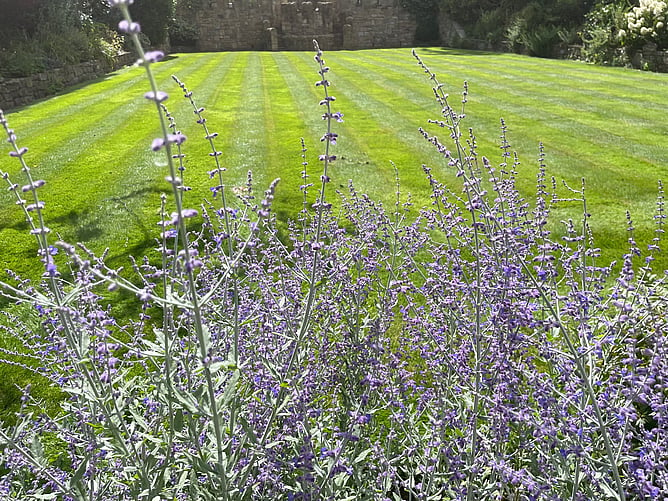
When you’re on the high of buying a new home, the garden often feels like a blank canvas full of potential. However, after years of working on these sites, I’ve seen firsthand that what lies beneath the surface is often a looming problem for the homeowner.
If you’ve moved into a new build recently, here are the "pain points" you might be inheriting—and how we approach fixing them properly.
1. The "Topsoil" Myth
Builders typically leave a topsoil depth of around 200–250mm. To be candid, this simply isn't enough to support large shrubs or ornamental trees. Within a few years, plants start to show signs of stress because they lack the room to establish.
Furthermore, builders rarely use quality topsoil; they often just scrape up whatever was on-site during construction and move it from garden to garden.
2. Compaction and Rubble
Before your lawn goes down, that ground has been subjected to heavy machinery and delivery lorries. This completely compacts the subsoil. Add to that the fact that many sites contain buried builders' rubble from demolished structures, and you have a recipe for disaster.
In areas like ours, where we have heavy clay soil, this compaction creates a massive drainage issue. After the sustained rainfall we’ve seen over recent winters, a garden without proper drainage becomes a swamp that you can’t use—which is especially challenging if you have small children or pets.
3. The Pennine Factor: Wind and Frost
Many of the sites I work on are situated toward the North Pennines, right in the path of the prevailing south-westerly winds. This area suffers from "frost pockets." If the temperature is -1°C at my home, it can easily be -4°C or -5°C on-site.
When you have saturated, clay-heavy soil, that frost expands the ground, which can even cause hairline cracks in paving. Then, in the summer, the clay shrinks. It’s a constant cycle of movement that a standard garden isn't built to handle.
How We Solve It
The ideal solution is to remove the poor topsoil and at least 100mm of the rubble-filled subsoil and start fresh. However, I understand that the cost of skips and materials makes this difficult for many.
This is why I advise on two critical steps:
Installing Land Drains: This is essential to ensure water actually has somewhere to go, rather than sitting on the surface.
Soil Management: We utilise soil from paving excavations to improve the depth of your borders, ensuring your plants have the nutrients and space they need to thrive.
My Advice to Buyers
If you are currently looking at a new build, try to inspect the site before they put the topsoil in. Look at the rubbish and rubble under the surface; it will save you a lot of headaches down the line.
A garden should be a retreat, not a source of stress. By getting the initial landscaping and drainage right, we ensure your garden remains a functional, beautiful space regardless of the weather.
Paul, Roseberry Landscapes.